Just After
Just after
The ultraviolent echoes of the alarmingly brief explosion faded slowly, like lingering waves on a turning tide. The final traces retreated, leaving only the barest hint of vibration in the air, soundless, yet almost tangible. A silence began to fall, but it was not profound. Its presence was fleeting, measured in mere moments, yet its legacy would last for generations. One last echo slipped away into the gloomy, damp October dusk. Then a new barrage of harsh sounds began: a pressurised pop from an overheated tyre as it burst apart, and the soft thump of fuel igniting in patches around the devastation that had once been an irritating, yet normal, piece of congestion on a Yorkshire motorway.
The modern mechanical sonata was replaced by something more primal and animalistic. Screams and yells of the injured and dying mingled with the shouts and wails of those spared, saved, perhaps, by some quirk of whatever gods they believed in. As chaos unfolded, the cries of survivors formed a strange symphony: no longer one of relief, but an anthemic operatic aria reflecting a new kind of hell. Three minutes have elapsed since the explosion, but time has not stood still; instead, it creeps relentlessly across the land, reminding this newly formed world that things will always move on. There would be no time slip, though, nothing to disturb the scene, only more distress for those left behind. Time may not have stopped, but for those present, it revealed that they were caught in a particularly malignant game of statues, not the innocent kind remembered from childhood. Frozen faces streaked with dust, blood and tears stood motionless amid the destruction; each person trapped in their own private nightmare.
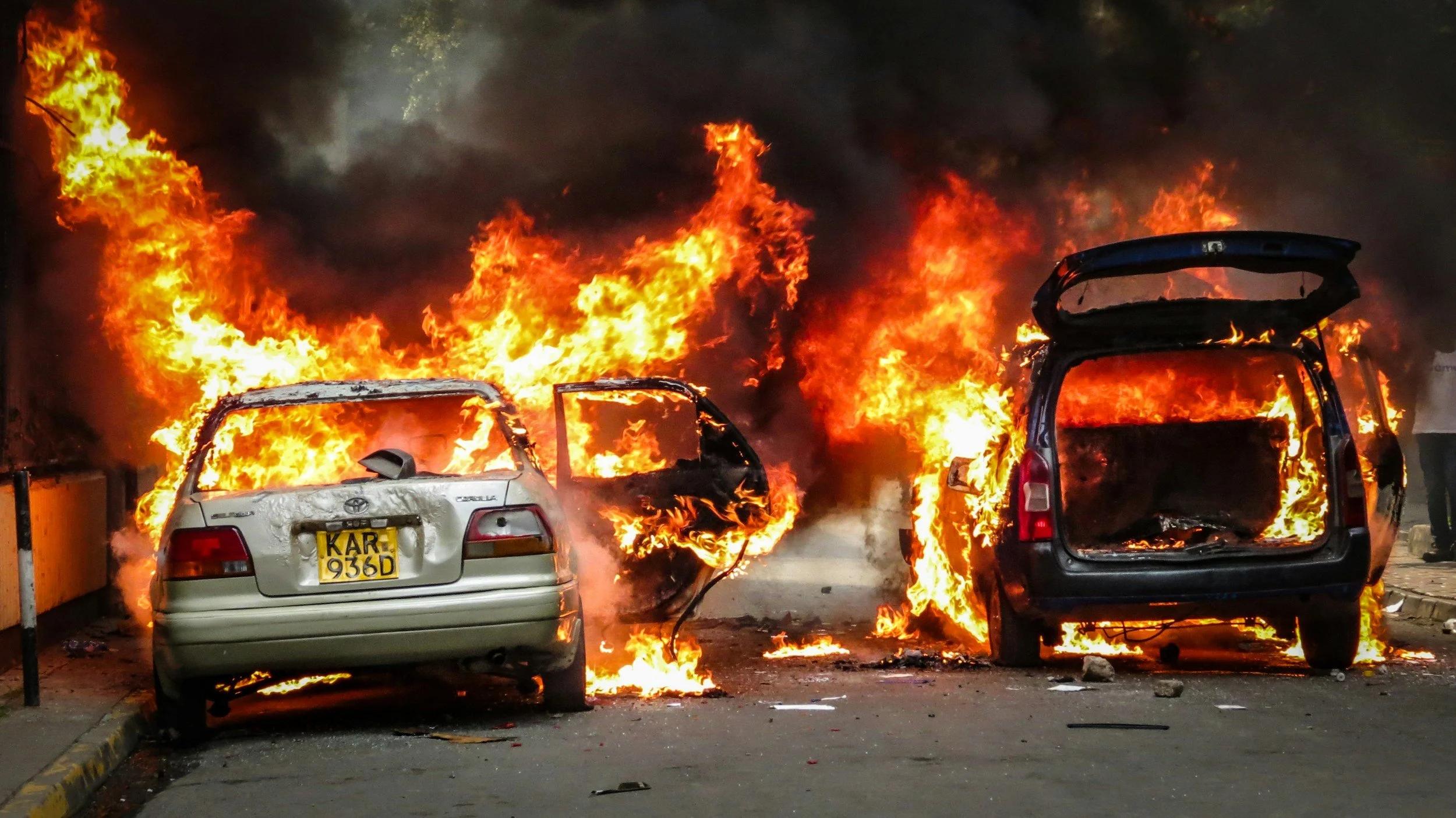
What had been a varied, yet ordinary, collection of vehicles on a busy motorway, some prized, some not so much, was now a burning, twisted landscape. Twisted metal carcasses crowded the motorway, while luckier vehicles showed only minor scars. Dents, missing panels, and smashed glass accompanied by flames stood in stark contrast to the ruined remains that would never appear in any catalogue or glitzy showroom again. Among the wreckage, abandoned belongings hinted at stories abruptly ended, making the devastation feel all the more personal. It seemed almost miraculous that some vehicles had escaped completely. A slight scorch, a burst tyre, a cracked headlight, or a dented panel were the only marks distinguishing their place in this chaotic endgame, a journey now leading down an infernal path towards a new nihilism.
The cause of the fury at the centre had removed most of the plain, rusty white van it had been contained in, a vehicle occasionally noticed and contemplated by fellow travellers but eventually ignored. Its contents, likely the cause of the catastrophe, were now nothing more than scattered debris.
Some vehicles at the epicentre experienced severe damage. These were the ones that were burning most intensely, providing the illumination in the increasingly dark autumnal environment. A constant fuel supply producing an intensity that even a modern Dante might envision. Those that had been the occupants of these vehicles were now frozen in place, locked in the firm embrace of the inferno raging around them, if they could have shown shock then they would have done so. They, however, wore the rictus grins similar to a mummified corpse as it is pulled from its boggy resting place by an archaeologist in Norfolk. It was as if they were laughing at the absurdity of this unimagined development. The rain that had intensified was only adding to the misery, yet making no impact upon the flames, almost as if it were fuelling them such was the ferocity at the centre.
The encroaching darkness of the October evening tried valiantly to push back the new blaze of light but eventually settled into uneasy neutrality. The darkness resented this unexpected intruder in its domain, but the fierce new artificial light kept its hostility at bay. The darkness paused, sensing a kinship with the deadly flames, as if acknowledging a fellow force of nature. For now, night was forced to retreat, biding its time with ageless patience, knowing it would one day reclaim its dominion.
The first survivors began to emerge, stumbling into view as if forced into motion by the searing heat. These people moved with a vacant, jerky rhythm, resembling malfunctioning automatons, oblivious to the dangers still smouldering around them. They passed shapes on the ground, remnants of those who may once have been like them. Now, these figures were identifiable only by their shoes. The rest of their features had become indistinguishable, fused and masked by the scorched tarmac, leaving only faint traces of their humanity behind.
A surface that had given up any recent semblance of smoothness was now humped and moulded into bizarre and peculiar patterns. The heat and force at the centre had reordered this stretch of road, this little part of Yorkshire. A landscape used to the ravages of industry and the natural erosion of its famed weather, had now been riven, its very fabric scarred in a few violent seconds.
Nobody at the scene and those that came to their aid, or those who helped afterwards to clear it all away, could imagine that this piece of the famous God’s own county would not bear its scars for ever. But would it be as with the wounds on another part of motorway further south and its aeroplane shaped tragedy, that the mutilations would no longer be visible. The drivers who now may pass comment as they drive past Kegworth, if they remember, but most don’t